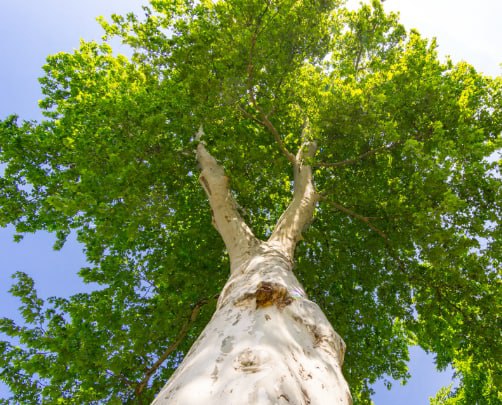
Trees can be among the most valuable features of a garden, providing shade, structure, privacy and natural character. However, they are continually growing and responding to their surroundings. As trees mature, branches can become overcrowded, damaged or poorly positioned, while changes within the crown may gradually affect the tree’s shape and relationship with nearby buildings, paths and garden areas.
Knowing when professional tree surgery could be beneficial is not always straightforward. Some problems are obvious, such as a large broken branch, while others develop gradually and are much easier to overlook.
For property owners in Hastings, East Sussex, recognising these warning signs can help ensure trees receive appropriate attention at the right time. Hastings Tree Care provides professional tree surgery based on the condition, size, location and individual requirements of each tree.
Why Is Professional Tree Management Important?
Tree surgery is not simply about cutting branches to make a tree smaller.
Good tree management begins by understanding why work is required. Depending on the circumstances, professional tree surgery may help remove damaged growth, manage an oversized crown, improve clearance or deal with branches that have become unsuitable for their surroundings.
Importantly, not every tree needs pruning simply because it is large. Mature trees can often remain valuable garden features when they are appropriately assessed and managed.
Here are seven signs that professional attention may be worthwhile.
1. There Are Dead or Dying Branches in the Crown
Deadwood can occur naturally as trees mature. Smaller twigs may not necessarily represent a significant concern, but larger dead or dying branches deserve closer attention, particularly when they extend above frequently used areas.
Dead branches gradually lose the qualities of healthy living wood and can become increasingly vulnerable to breaking.
Look for signs such as:
- Branches remaining bare during the growing season
- Brittle-looking twigs and limbs
- Deteriorating or peeling bark
- Sections producing no new growth
- Broken branches caught within the crown
Where substantial deadwood is positioned above a driveway, path, garden or other regularly used area, professional assessment can determine whether controlled removal would be appropriate.
2. Branches Have Been Broken or Damaged
Strong winds and difficult weather can leave branches partially broken without bringing them completely down.
A damaged limb may remain attached to the tree but no longer have its original structural integrity. Split branches can also become difficult to identify from ground level when damage occurs higher within a dense canopy.
Particular attention should be given to:
Hanging Branches
Partially detached branches can remain caught within surrounding growth.
Split Limbs
A branch may still appear healthy beyond the point where a significant split has developed.
Freshly Broken Sections
Visible damage after strong weather should be professionally assessed, especially where substantial branches are involved.
Removing compromised growth in a controlled manner can prevent damaged branches from being left to deteriorate unpredictably.
3. The Crown Has Become Too Large for Its Surroundings
Healthy trees naturally increase in size, but the available garden space does not increase with them.
A tree that suited its location when younger may eventually develop a crown that feels disproportionately large for the surrounding area.
Branches may begin extending towards:
- Buildings
- Garden structures
- Driveways
- Paths
- Seating areas
- Other established trees
Where appropriate, professional crown reduction can reduce the overall dimensions of a canopy while retaining a balanced tree shape.
This is very different from indiscriminately cutting branches back. A carefully planned reduction considers suitable pruning points, branch structure and the natural form of the tree.
4. Branches Are Creating Unwanted Obstructions
Sometimes a tree remains healthy but its growth begins interfering with how the surrounding garden is used.
Low branches may obstruct a pathway, while lateral growth can reduce practical clearance around certain areas. Other branches may extend into spaces where they are increasingly inconvenient.
Professional pruning can selectively address these issues without unnecessarily reducing the entire tree.
The objective should be to solve the specific problem while retaining healthy growth wherever possible.
For gardens in Hastings, East Sussex, this can be particularly useful where established trees occupy prominent positions within frequently used outdoor spaces.
5. The Tree Has Become Dense or Unbalanced
A tree crown does not always develop evenly.
Growth can become concentrated towards one side because of available light, surrounding structures, competition from nearby vegetation or previous pruning.
A noticeably unbalanced crown does not automatically mean the tree is unstable, but significant changes in shape can justify professional assessment.
Likewise, a particularly dense crown may sometimes benefit from selective work depending on the tree and the reason intervention is being considered.
Tree surgeons can assess:
- Branch distribution
- Overall crown shape
- Crossing or conflicting growth
- Damaged sections
- Previous pruning points
- The relationship between the canopy and surrounding space
Any pruning should then have a clear objective rather than simply removing branches because the crown appears dense.
6. Branches Are Crossing, Rubbing or Competing
As a crown develops, individual branches can sometimes grow across one another.
Where branches repeatedly rub together, their bark can become damaged. Competing growth may also create an unnecessarily congested section within the canopy.
These issues are often easier to manage when identified before the branches become substantially larger.
Selective professional pruning can remove unsuitable growth while preserving the stronger and better-positioned branches.
The result should not be an excessively thinned canopy. Instead, the aim is to make considered cuts that support a more appropriate crown structure.
7. You Are Unsure About the Condition of a Mature Tree
Not every reason for arranging professional tree surgery begins with an obvious defect.
Large mature trees can be difficult to assess properly from the ground. Their upper crowns may contain deadwood, old storm damage or structural features that are difficult for homeowners to see clearly.
You may benefit from professional assessment if you have noticed:
- A significant change in the crown
- Newly dead sections
- Increasing quantities of fallen branches
- Unusual branch movement
- Cracks or splits in substantial limbs
- Changes following strong winds
- An increasing amount of damaged growth
An assessment does not automatically mean extensive work will be recommended. In some situations, the most appropriate conclusion may be that little or no immediate pruning is required.
What Type of Tree Surgery Might Be Recommended?
The correct work depends entirely on what the tree actually needs.
Different operations serve different purposes.
Deadwood Removal
Dead or significantly compromised branches can be selectively removed while retaining healthy growth.
Crown Reduction
The height and/or spread of a crown can be reduced where the tree has become unsuitable for its available space.
Selective Pruning
Individual branches can be removed to improve clearance or address specific structural concerns.
Crown Management
Targeted work can help address unsuitable, damaged or conflicting growth without unnecessarily altering the complete tree.
Sectional Dismantling
Where a tree ultimately requires removal and there is insufficient space for straightforward felling, it may need to be carefully dismantled in controlled sections.
Professional assessment determines which approach is suitable rather than applying the same pruning method to every tree.
Why Excessive Pruning Is Not the Answer
More pruning does not automatically produce a better result.
Removing too much healthy growth can unnecessarily alter the tree’s natural structure and appearance. Poorly positioned cuts can also create undesirable future growth.
Good tree surgery is selective.
The aim is to identify why intervention is required, determine which branches genuinely need attention and retain healthy tree structure wherever practical.
This is one of the main reasons professional experience matters.
Why Tree Size Makes Professional Work Important
The larger a branch becomes, the more complicated its removal can be.
Cutting substantial timber at height requires appropriate techniques and careful control, particularly where buildings, fences, vehicles or garden features are nearby.
Branches cannot always simply be cut and allowed to fall.
Professional tree surgeons can plan the sequence of work and, where necessary, lower sections in a controlled manner to manage the space beneath the tree.
Don’t Wait for a Branch to Fall Before Taking Notice
Tree problems do not always require urgent intervention, but noticeable changes should not simply be ignored.
A dead limb, significant split or storm-damaged branch can become more difficult to manage if deterioration continues. Likewise, an overgrown crown can become increasingly unsuitable for its surroundings as branches grow larger.
Having the tree assessed earlier can provide more options for proportionate management.
The objective is not to prune trees unnecessarily, but to recognise when appropriate intervention could prevent an existing issue from becoming more difficult.
Professional Tree Surgery in Hastings
Every tree is different. Species, age, condition, location and surrounding features all influence what type of work may be suitable.
At Hastings Tree Care, we approach tree surgery by assessing the individual tree and understanding the reason work is being considered. This allows pruning and other tree work to be focused on genuine requirements rather than removing healthy growth without purpose.
Whether the concern involves dead branches, storm damage, an oversized crown or problematic growth, professional assessment can help establish the most appropriate way forward.
Conclusion
The seven key signs that a tree could benefit from professional tree surgery include dead branches, damaged limbs, an oversized crown, obstructive growth, an unbalanced canopy, crossing branches and noticeable changes in the condition of a mature tree.
These signs do not necessarily mean extensive pruning or tree removal is required. Often, selective and carefully planned work can address a specific problem while retaining the healthy structure and character of the tree.
For property owners in Hastings, East Sussex, Hastings Tree Care provides professional tree surgery tailored to the condition and surroundings of individual trees. If you have noticed damaged, dead, overgrown or problematic branches in your garden, contact our team to arrange an assessment and discuss the most appropriate tree care for your property.
Call us on: 01424 619092
Click here to find out more about Hastings Tree Care
Click here to complete our contact form and see how we can help with your trees needs.