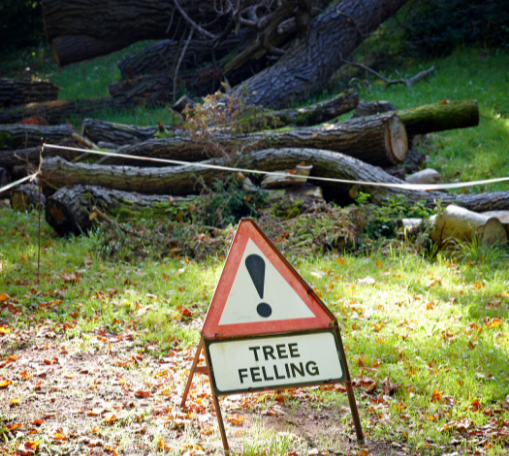
After a tree has been felled, the remaining stump can appear far less substantial than the original tree. However, the visible section represents only part of the problem. Beneath the ground may be a broad network of structural roots that once supported the tree and absorbed considerable forces from wind and the weight of the canopy.
Old tree stumps can therefore be difficult to remove using ordinary garden tools. Dense wood, extensive roots, restricted access and hidden obstructions all influence the work required. For property owners in Hastings, East Sussex, professional stump grinding can provide a controlled way to remove the obstruction without excavating the entire surrounding area unnecessarily.
What Makes an Old Tree Stump So Difficult to Remove?
A tree stump is firmly anchored by roots extending through the surrounding soil. Its size, species, age and growing conditions all affect how difficult it will be to remove.
Although some stumps gradually decay, this can be a slow and uneven process. The outer wood may soften while the centre and larger roots remain dense and firmly embedded.
Root Systems Extend Beyond the Visible Stump
Large structural roots commonly spread out from the base of a tree in several directions. These roots can remain strong even after the trunk has been removed.
Digging out a stump manually means locating, exposing and cutting enough of these roots to release it. The process becomes increasingly difficult when roots extend beneath paths, planting areas, fences or other garden features.
The visible diameter of the stump does not always indicate the full extent of the root system below ground.
Mature Wood Can Be Extremely Dense
The central wood of a mature tree may resist hand saws, axes and digging tools. Certain stumps contain twisted grain or multiple stems that make them particularly awkward to cut into manageable sections.
Age does not necessarily mean that the stump has become soft. If the wood remains relatively dry and sound, it may retain substantial strength for many years.
Attempting to break up dense timber manually can require considerable effort while still leaving much of the stump below the surface.
Soil and Stones Can Obstruct the Roots
Roots grow around stones, rubble and compacted soil. These materials can make excavation difficult and may damage unsuitable cutting tools.
Soil also becomes embedded within root junctions and cavities. This limits visibility and makes it harder to determine where individual roots can be cut effectively.
Professional stump removal begins with an assessment of the immediate area so the work can be approached methodically.
Stumps Are Often Cut Close to Ground Level
A low stump has little exposed trunk available for leverage. While cutting a tree close to the ground leaves a tidier appearance, it can make manual extraction considerably harder.
Pulling or rocking the stump becomes impractical when there is no substantial section above ground to grip. The remaining root plate may still be firmly anchored despite appearing relatively small.
A stump grinder does not rely on leverage. Instead, it reduces the wood progressively from the top and can continue below the surrounding ground level.
Restricted Garden Access Complicates Removal
Tree stumps are frequently located near boundaries, buildings, patios or established planting. Access may be limited by narrow gates, steps or changes in ground level.
Large excavation machinery may not be suitable for these spaces. Specialist stump grinders are available in different sizes, allowing the equipment to be selected according to the stump and access conditions.
Careful planning also helps protect nearby features from avoidable disturbance.
Hidden Roots Can Be Difficult to Locate
The direction of major roots is not always obvious from the surface. Some may descend steeply, while others travel laterally before branching.
Manual excavation can expose a substantial amount of soil without releasing the stump. Grinding targets the main stump and prominent roots directly, reducing the need to uncover the complete root system.
The required grinding depth will depend on how the area is intended to be used afterwards.
Some Stumps Can Produce New Growth
Certain tree species can send up shoots from a remaining stump or root system. Cutting these shoots back repeatedly does not necessarily prevent further growth.
Grinding removes the main stump and can treat accessible surface roots, substantially reducing the material from which regrowth may emerge. The response still depends on the species and condition of the roots, so the stump should be assessed individually.
Why Burning or Using Chemicals Is Not a Quick Solution
Homeowners sometimes consider burning a stump or applying products intended to accelerate decay. These approaches do not provide immediate, controlled removal and may leave substantial roots in the ground.
Decay treatments can take a considerable time to affect dense wood. Burning may also fail to reach damp or buried sections, leaving an uneven cavity and a partially intact stump.
Mechanical grinding provides a more precise way to reduce the stump to a specified depth.
How Professional Stump Grinding Works
A stump grinder uses a rotating cutting wheel fitted with durable teeth. The wheel moves across the stump in controlled passes, breaking the wood into small chips.
Grinding can typically continue below ground level so that the remaining cavity can be cleared or backfilled. Prominent surface roots may also be treated where required and accessible.
The appropriate machine and working depth depend on:
- the stump’s diameter and height
- the tree species and wood condition
- the spread of visible roots
- access to the garden
- nearby surfaces and structures
- the intended future use of the area
Assessing these factors before work begins helps produce a practical result with proportionate disturbance.
What Can Be Done with the Area Afterwards?
Removing a stump can make the garden easier to maintain and create usable space for landscaping, planting or another suitable surface. The next step depends on the grinding depth and the amount of root material remaining underground.
The cavity should be prepared appropriately for its intended use. Organic wood chippings can settle as they decompose, so simply covering the area may not provide a stable base for every type of garden improvement.
Planning the final use in advance allows the stump to be ground to a suitable depth.
Conclusion
Old tree stumps are difficult to remove because their dense wood and extensive root systems remain firmly anchored beneath the ground. Restricted access, embedded stones and a lack of leverage can make manual excavation slow and disruptive.
If an old stump is occupying valuable space in your garden in Hastings, East Sussex, Hastings Tree Care can assess its size, position and access requirements before carrying out professional stump grinding. Contact our team to arrange an assessment and discuss the most suitable approach.
Call us on: 01424 619092
Click here to find out more about Hastings Tree Care
Click here to complete our contact form and see how we can help with your trees needs.